
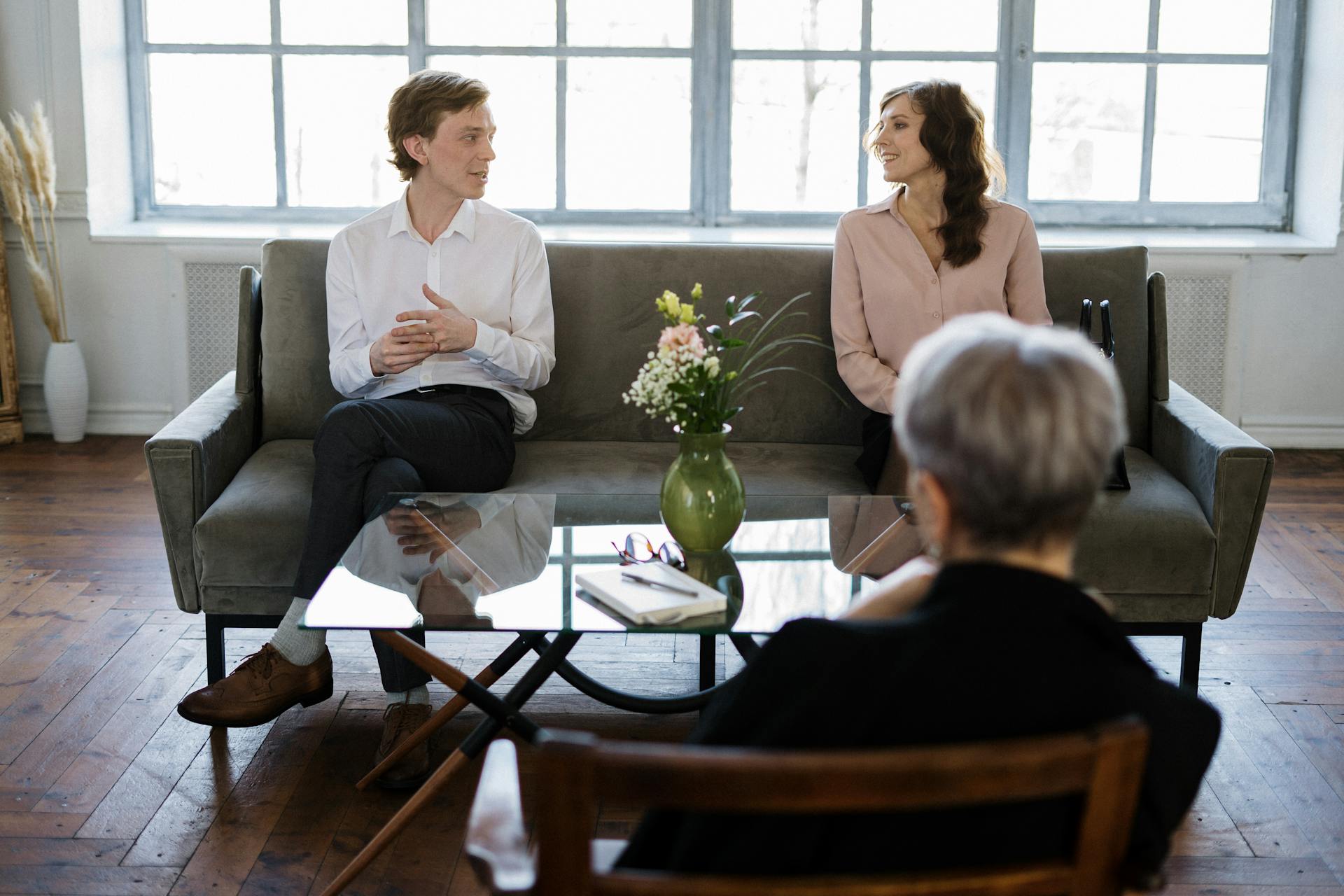
RELATIONSHIP COUNSELLING AND COUPLES COUNSELLING

Relationship counselling can often mean couples counselling, but it can also include all kinds of other relationships such as with family members, work colleagues, friends and so on. The aim of relationship counselling is to help recognise, and better manage or reconcile difficulties between those within the relationship.

If you are experiencing relationship issues, you may find it beneficial to attend relationship counselling sessions. Please read below to find out more about what type of therapy would suit you best.

RELATIONSHIP COUNSELLING

I am ready to listen to you today!

Start your journey now by booking an appointment or asking a question.

I am a fully qualified relationship counsellor and hold a Diploma in Working with Couples with the Psycho-Semantics Institute in the UK.  I have also trained in IMAGO relationship counselling and have over 25 years experience working with couples and running Relationship Workshops. Prior to that I worked in settings where family therapy was required.

In booking a consultation with me I will be able to determine the main issues in your relationship and outline for you an appropriate intervention programme which will involve teaching you new skills as well as resolving conflicts. 

As a qualified psychotherapist and counsellor, you can rest assured that you are in safe hands. With me you know that I have the skills and the experience to help you deal with  issues in a safe, non-judgemental and confidential manner.

Conflict in a relationship is growth trying to take place… And it is perfectly normal and part of growth in a relationship for conflict to occur.

Conflict is enevitable in any relationship and varies in degree. Relationship counselling will help you work through this conflict, and start the process of personal growth and healing. If you are experiencing conflict in your relationship with your partner or spouse, finding someone else does not solve the problem. This is because the root of the problem often lies within yourself. Therefore you’ll only be taking the same or similar problems and behaviours into the new relationship.

Conflict in relationships at some time or other is inevitable because your emotional development needs to happen. Consequently your subconscious mind is compelled to bring you to similar situations until you resolve these issues. Once these issues are resolved you can then move on to grow into the person you are meant to be. Relationship counselling will help you explore these issues.

Couples Counselling

focuses on improving communication and resolving issues within an intimiate relationship. It involves therapy for both people with the relationship.  It is hard to acknowlege that there are difficulties within your marriage or with your partner but if you can agree together to seek help together to try and resolve the issues it demonstrates that you care about the relationship. If you both want to do something about it, then there is hope that things can change.

Having said that however, often a partner is reluctant to attend sessions with you. Don’t let this deter you for you can speak to me on your own to begin with. After you have had a few appointments on your own your partner may want to join you. Some people find it helpful to have individual sessions in between couple sessions. It is important you do what works for you best.

You may find the thought of attending couples counselling daunting, however I can assure you both, that you will be working with an experienced professional. Couples counselling with me will provide you the opportunity to explore the difficulties you face in a safe, impartial and non-judgemental environment. I will give both of you equal time and space to talk about your perspective on the situation and you will have opportunity to gain an understanding of your partners view.

Some Suggestions of when counselling might be helpful

TAKE THAT FIRST STEP...

Book your first 20 minute FREE telephone consultation

I’m ready to listen to you now. So click on the button below to arrange a convenient time for a FREE 20 minute telephone consultation. There is no obligation to arrange further appointments. Why not share what troubles you and see if we can work together in finding the solution. Everything we discuss is in confidence.

Attraction - How does it happen?

Every counselling session is tailored to your individual needs. There are several ways we can do this.

Unconsious Attraction

Most people believe that we choose the person we want to spend the rest of our lives with, and it may be true that you have a mental list (or even a written one) of the qualities you are looking for in finding your perfect partner. This list may include specific behaviours, or it may be about their appearance, or even a combination of both. Most of us do this to some extent.

Well, I’m about to tip this notion of having a choice on the head. Attraction to another person has very little to do with conscious choice. It has everything to do with complex subconscious needs that you and I have to resolve in order for us to complete our personal growth and attain wholeness. There is some very good research around to suggest that we are unconsciously attracted to another person, and that he or she is to us.

We can find clues to support this view in our everyday language about love. The common description of ‘falling in love’ and ‘falling head over heels’ are terms that imply that we have little or no control when it comes to matters of the heart. Sometimes we even enter a relationship against our better judgment. Some people experience ‘love at first sight’ and even for couples who have known each other a while, there is a moment of sudden relisation that ‘they have fallen in love’. Love therefore is described as something that happens to us, a deeply complex subconscious event…beyond our control.

Our subconscious mind is compelled to find a person whose qualities match those of our early caregivers or parents. These qualities are usually a mixture of both positive and negative traits or characteristics that are found in both caregivers. This is because your subconscious wants to resolve unmet needs and heal wounds from your childhood, and believes the only people that can do this are ones that hold similar traits to your early caregivers.

Your subsconscious does not operate in linear time, so when you meet someone who has these qualities, your mind immediately relates to them and connects them bringing your past into your present. This explains why you and I experience feelings of familiarity when we meet the person who feels right for us.

Some people describe this familiarity, by expressing they have “known” their partner all their life even though they have just met. Other’s have a feeling of being ‘complete’ feeling whole when they are with this person. This is because your subconscious recognizes traits from your early caregivers within your partner. Hence the feeling of deep intimacy and completeness.

When you experience romantic love, you believe you’ve met the person you’ve been waiting for all your life. You have met the man or woman of your dreams, life is wonderful, you feel alive and full of energy. Life is full of anticipation. You feel great and generally create happiness wherever you go. You do all you can to please your partner, going the extra mile and taking greater effort with your appearance. He or she is constantly in your thoughts and when you’re apart you’re texting and phoning, just to have that contact. You’ve finally found “The One” and you believe and want these feelings to last forever.

You are ecstatic because your subconscious has found the perfect match for you and your healing and growth into wholeness can commence. Your brain releases chemicals causing you to experience loss of appetite, sleep disturbance and inability to concentrate. In addition you may experience an increase in energy, sexual desire and general feelings of well-being.

Things go along nicely for a while, then gradually start to simmer down. You enter the second stage of a relationship and start to experience disappointment and concern.

You notice the flaws in the other person that you had previously overlooked, and now begin to irritate you. Also you may start to feel frustrated and disappointed with his or her behaviour. A common frustration may be that you just can’t understand why he/she does not intuitively know what you need, want or how you feel. You sense your partner is behaving and feeling differently towards you. You may even fear they are losing interest in you and even ‘falling out of love’ with you. Additionally, passion and sexual desire may lessen, and you may feel your love for your partner is dying. Sometimes you may even think that you chose the ‘wrong’ partner and made a mistake.

The reality is that you are subconsciously realizing that your partner cannot meet your unresolved needs from childhood. Furthermore, it is this disappointment that causes inner distress and insecurity, and you start to protect yourself. This stage is often called ‘the power struggle’ where winning an argument, or being right becomes more important than listening to each other, and working towards the loving relationship you both want.

Too many couples feel the only answer is to end the relationship or separate for a while. Or alternatively they may resign themselves to a workable arrangement, such as staying together for the sake of the children or for financial reasons. Relationship counselling will help you focus on what you need from the relationship with your partner or spouse. Furthermore it will give you the skills to resolve conflict and improve communication.

Scroll to Top